
Good questions.
Real fieldwork.
FIELD PROGRAMS / COSTA RICA
Take your course into the tropical dry forest. Explore field modules, follow the evidence, and imagine a program shaped around your students.
EXPLORE. OBSERVE. QUESTION. UNDERSTAND.
Tropical dry forest · Ecological inquiry · People & land · Learning through evidence
FIND YOUR FIELD QUESTION
Start with curiosity. Leave with evidence.
Three connected starting points for place-based learning. Open a module to see what students investigate, measure, and produce.
Proposed modules · Adaptable to your course
ACTIVITY / Forest ecology
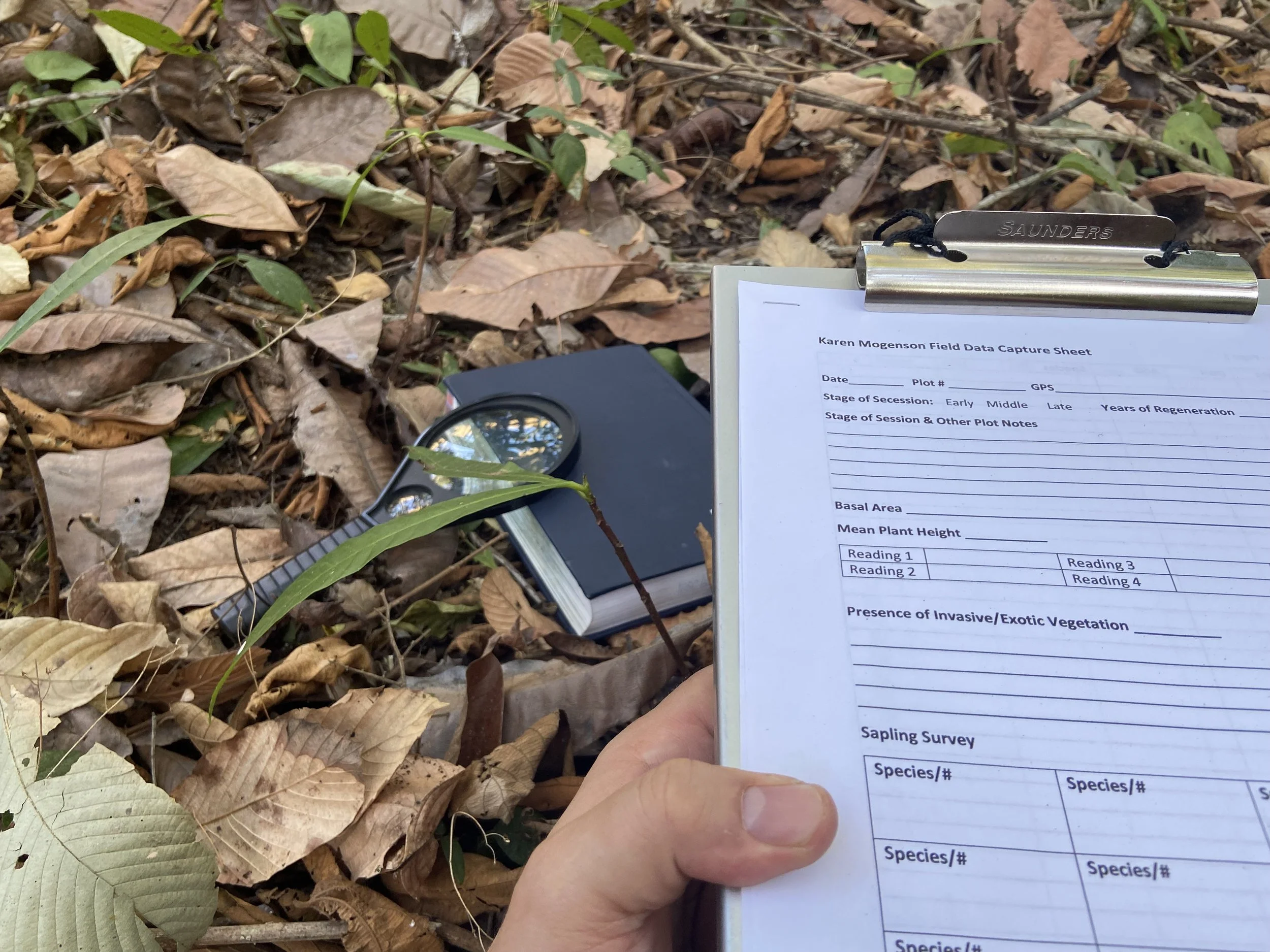
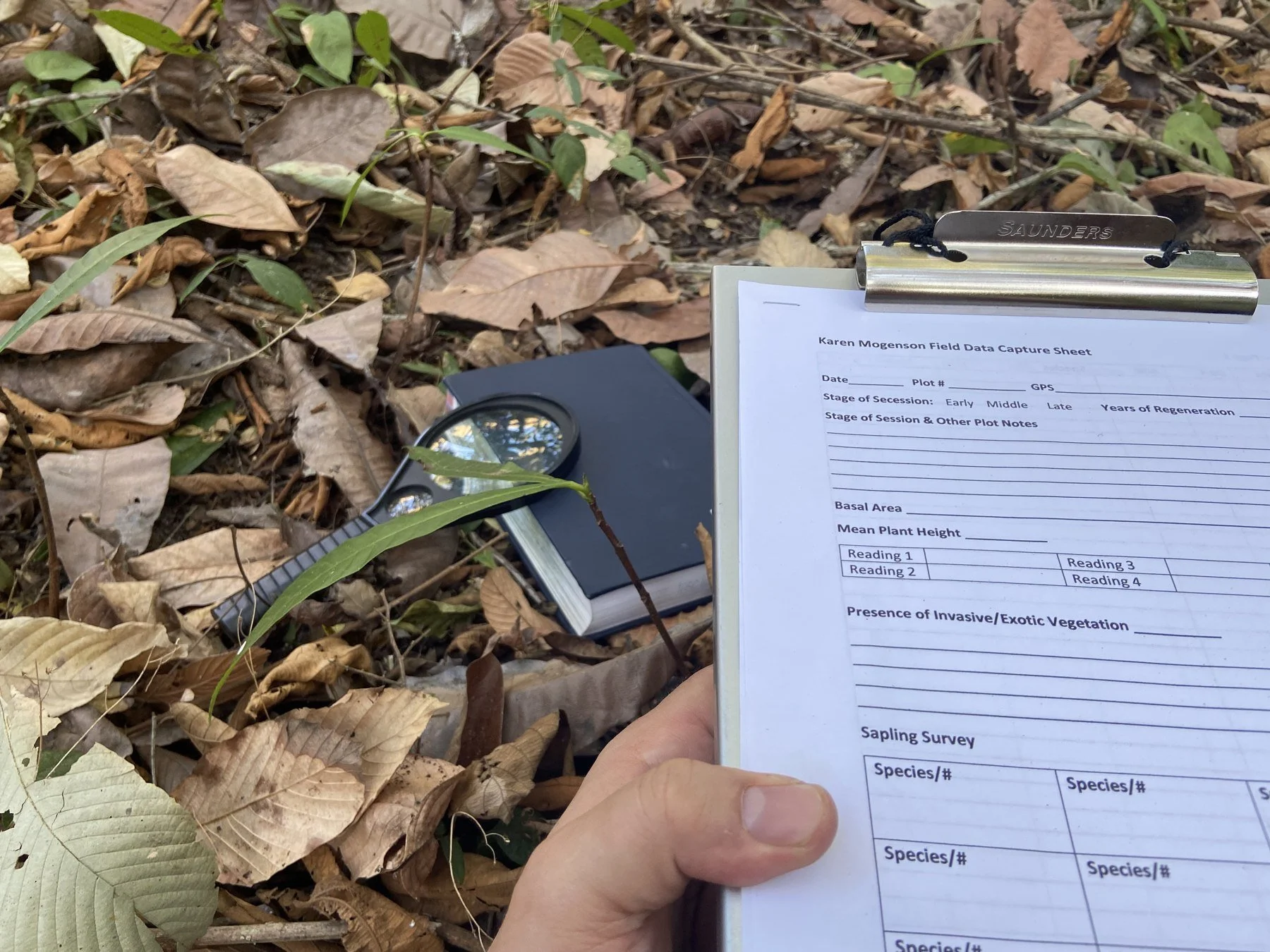
How does a forest return?
Read the signs of succession. Compare regeneration across pasture edges and recovering forest.
Field question
How do seedling counts differ between a pasture edge and regenerating forest?
Field steps
Frame a question and define comparable sampling units.
Count seedlings in standardized quadrats.
Record habitat, sampling area, date, and observer.
Check records and discuss replication and disturbance history.
Learning objectives
Practice consistent sampling, compare regeneration patterns, and distinguish an observed difference from an explanation. A short visit offers a snapshot, not a measure of long-term change.
Student outputs
Field notebook, quadrat dataset, a comparison figure, and a brief interpretation with limitations.
Measurements
Seedling counts, sampling area, habitat, date, and observer.
Duration and student level
Proposed module · Half–full day · Adapted to course level, access, and field conditions.
ACTIVITY / Water & soils
Follow the water.
Connect vegetation, soil, and water. Explore how the landscape shapes infiltration and watershed processes.
Field question
Does the same volume of water infiltrate differently beneath tree cover and in open ground?
Field steps
Choose comparable locations and record surface conditions.
Use a consistent demonstration volume and ring setup.
Time infiltration and document units and recent rain.
Repeat trials and identify sources of measurement variation.
Learning objectives
Link a water-process demonstration to a testable question. Practice recording time, volume, and context while recognizing that a small trial cannot establish watershed-scale effects.
Student outputs
Site notes, infiltration trial table, a comparison plot, and a short methods critique.
Measurements
Infiltration time, water volume, surface conditions, and recent rain.
Duration and student level
Proposed module · Half–full day · Adapted to course level, access, and field conditions.
ACTIVITY / People & land
Where landscapes meet.
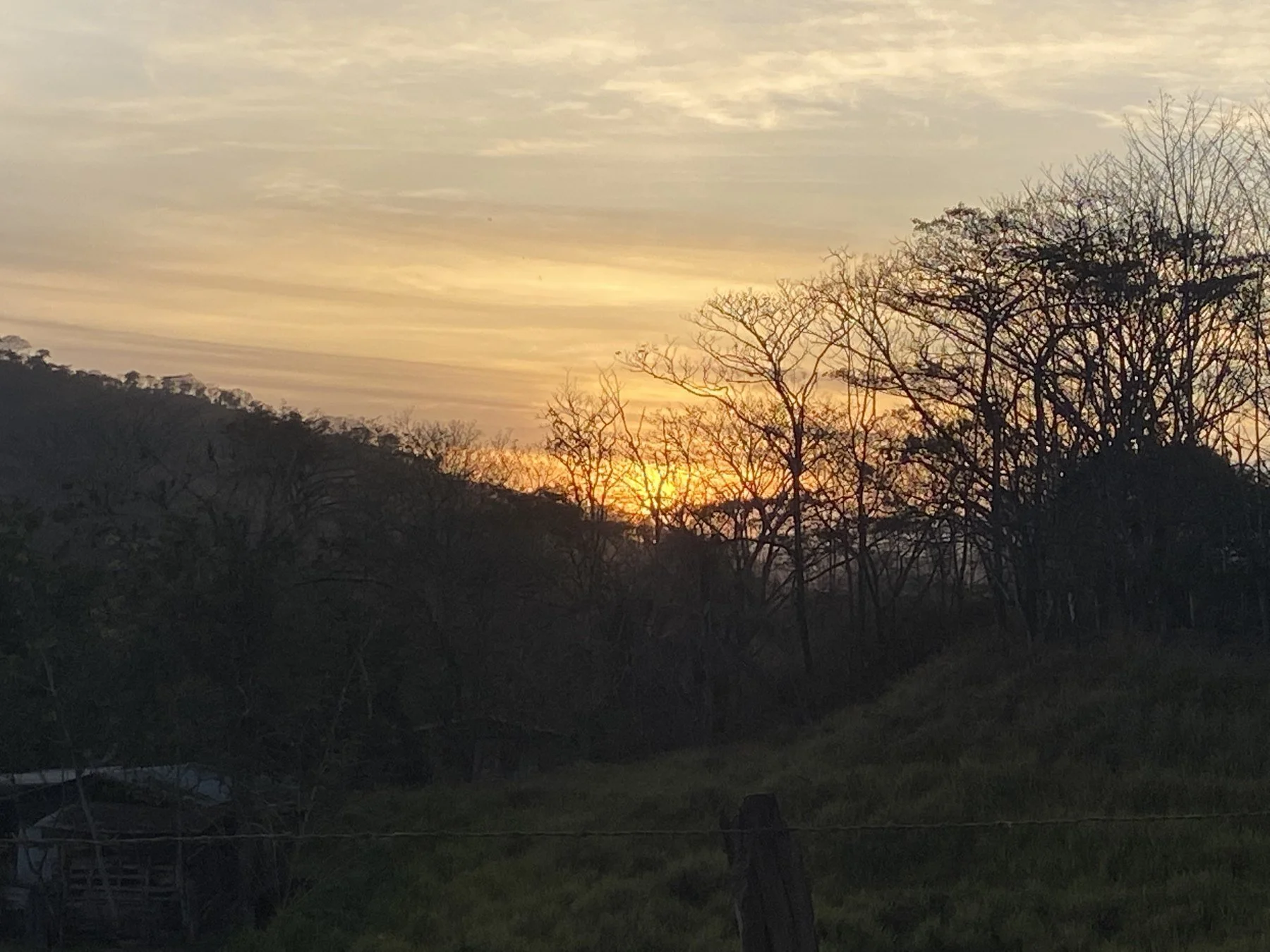
Investigate trees in a working landscape. Connect ecological observations with land-use choices and conservation.
Field question
How does tree presence vary along selected pasture and forest-edge transects?
Field steps
Set equal-length observation transects with clear boundaries.
Record trees and estimate canopy cover consistently.
Document the land-use context in field notes.
Compare patterns and identify questions for land stewards.
Learning objectives
Connect field measurements with the tradeoffs of conservation and production. Separate ecological observations from assumptions about management goals or local knowledge.
Student outputs
Transect records, a landscape comparison, and a short land-stewardship discussion brief.
Measurements
Tree observations, equal transect lengths, estimated canopy cover, and land-use context.
Duration and student level
Proposed module · Half–full day · Adapted to course level, access, and field conditions.
FROM FIELDWORK TO FINDINGS
The experience becomes evidence.
Students do more than collect numbers. They document how observations were made, check their records, and explain what the evidence can—and cannot—tell us.
Ask & observe
Frame a question rooted in this landscape.
Measure & check
Follow a protocol. Record units and context.
Interpret & share
Clean a dataset. Make a figure. Discuss the limits.
Synthetic examples for learning. No site monitoring results are shown.
Example dataset: Forest recovery · Seedling counts
Example question: are seedling counts different across two habitats?
CSV
QUADRAT,HABITAT,AREA (M²),SEEDLINGS
Q01,Pasture edge,4,3
Q02,Pasture edge,4,5
Q03,Regrowth,4,12
Q04,Regrowth,4,16
From record to result: compare seedlings per m² by habitat, then discuss the small sample and how plots were selected.
Example dataset: Water & soils · Infiltration
Example question: how does infiltration time vary with ground cover?
CSV
TRIAL,COVER,WATER (ML),TIME (S)
W01,Tree cover,250,42
W02,Tree cover,250,51
W03,Open ground,250,95
W04,Open ground,250,110
From record to result: compare infiltration time for equal volumes. Consider soil moisture, ring placement, and limited replication.
Example dataset: Working landscapes · Tree cover
Example question: how do tree observations vary across landscape settings?
CSV
TRANSECT,SETTING,TREES,COVER (%)
L01,Open pasture,2,10
L02,Open pasture,3,15
L03,Forest edge,11,55
L04,Forest edge,14,70
From record to result: compare equal-length transects and estimated cover. Use the pattern to frame a stewardship question, not a causal claim.
THE CENTER / IN DEVELOPMENT
A place to gather. A base to explore.
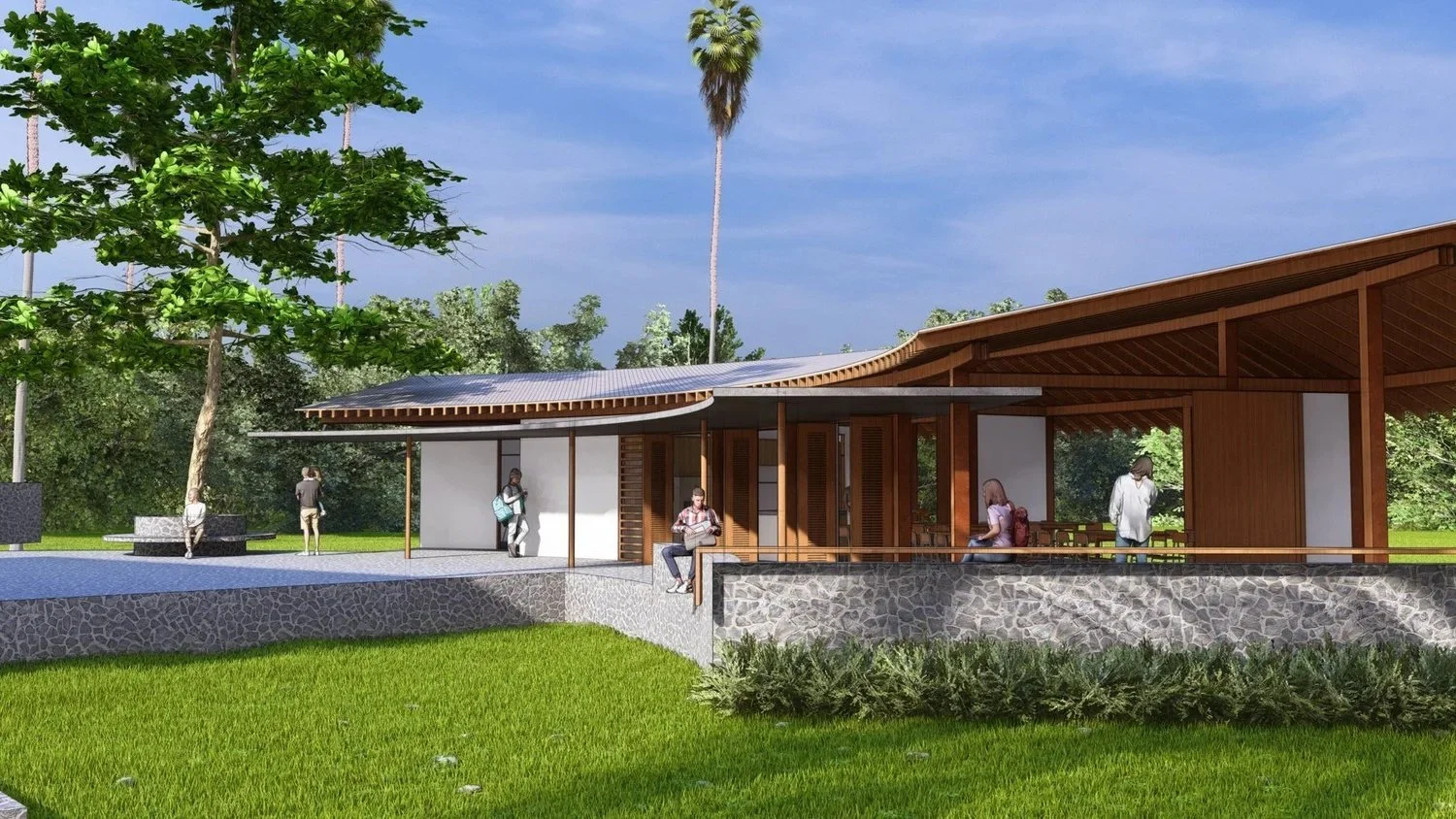
Designed for small educational groups, with spaces to prepare for the field, share meals, examine evidence, and keep the conversation going.
14 student beds planned
Six dorm rooms plus educator accommodation.
Learning beyond the field
A communal rancho is planned for teaching, meals, and synthesis.
Near Río Blanco / Jicaral, Guanacaste, on Costa Rica’s Nicoya Peninsula.
Renderings show the planned design, not completed buildings. Opening dates, capacity, services, access, and safety arrangements will be confirmed before booking.
PATHWAY / 1 day
One question. A complete inquiry.
A focused introduction that gives students the full arc of an investigation, from first observation to a shared explanation.
MORNING
Read the landscape
Orient to the place, frame a forest-recovery question, and practice a common protocol.
MIDDAY
Collect & compare
Work in small teams, record a manageable sample, and check field notes together.
AFTERNOON
Make sense of it
Clean the records, compare patterns, and share a short group interpretation.
WHAT STUDENTS TAKE AWAYField notes + a small dataset + a group explanation
Suggested modules
PATHWAY / 2–3 days
Build confidence in field methods.
Practice more than one method, compare connected systems, and give students time to question the quality of their evidence.
DAY 1
Forest & question
Orient, practice plot sampling, and build a first forest-recovery dataset.
DAY 2
Water & comparison
Run an infiltration demonstration and compare observations across settings.
OPTIONAL DAY 3
Check & communicate
Revisit data quality, develop figures, and present a short methods comparison.
WHAT STUDENTS TAKE AWAYTwo example datasets + comparison figures + a methods reflection
Suggested modules
PATHWAY / 5–7 days
Follow a question a little further.
Connect multiple modules with a small team investigation and a considered final synthesis. Planned residential arrangements require confirmation.
DAYS 1–2
Place & practice
Read the landscape, learn core protocols, and shape a feasible team question.
DAYS 3–4
Investigate & refine
Collect observations across forest, water, and working-landscape modules.
DAYS 5–7
Analyze & share
Check data, develop figures, and present findings. Use additional days to refine the investigation.
WHAT STUDENTS TAKE AWAYA cleaned project dataset + figures + a final team presentation
Suggested modules
YOUR COURSE. THIS LANDSCAPE.
What will your students discover?
Collect your ideas in a program outline. Then start a conversation with Exploravista.
Planning draft only. Programs, dates, field access, staffing, accommodation, services, and prices require individual confirmation.